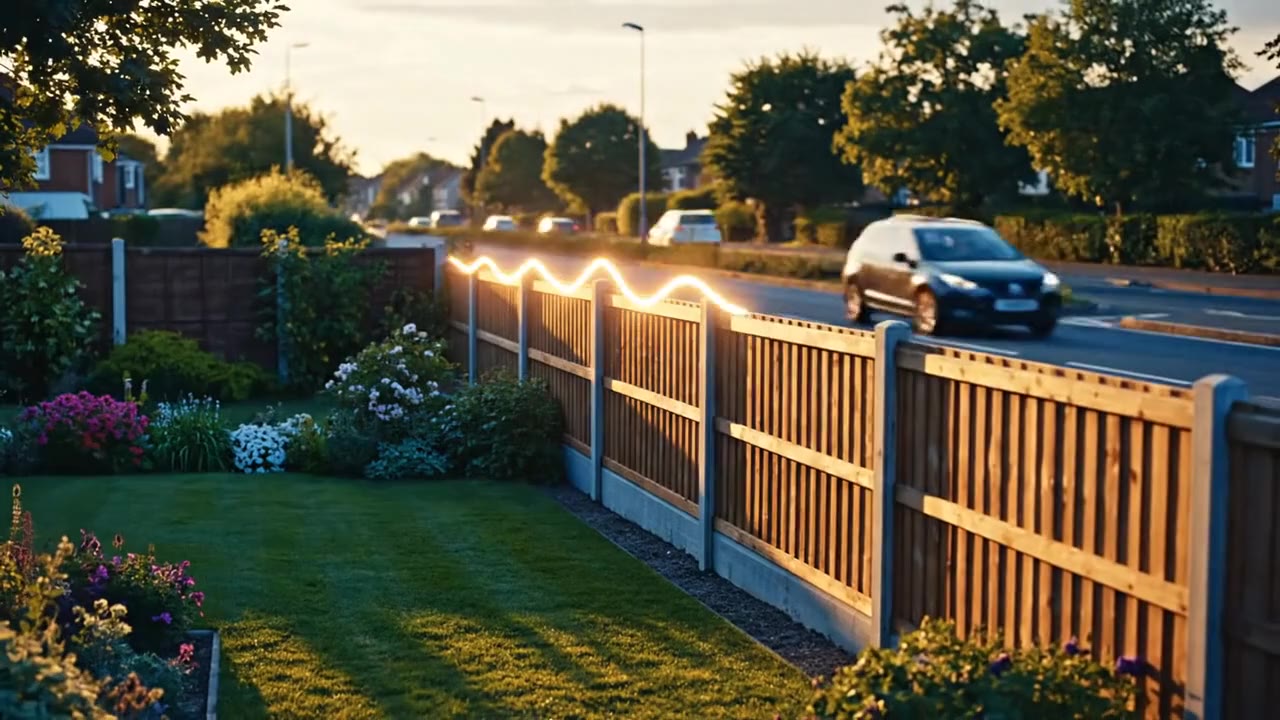
Will a fence actually fix it?
Find out what a barrier would really do for your garden and windows — and roughly what it would cost — before you pay anyone to build one.
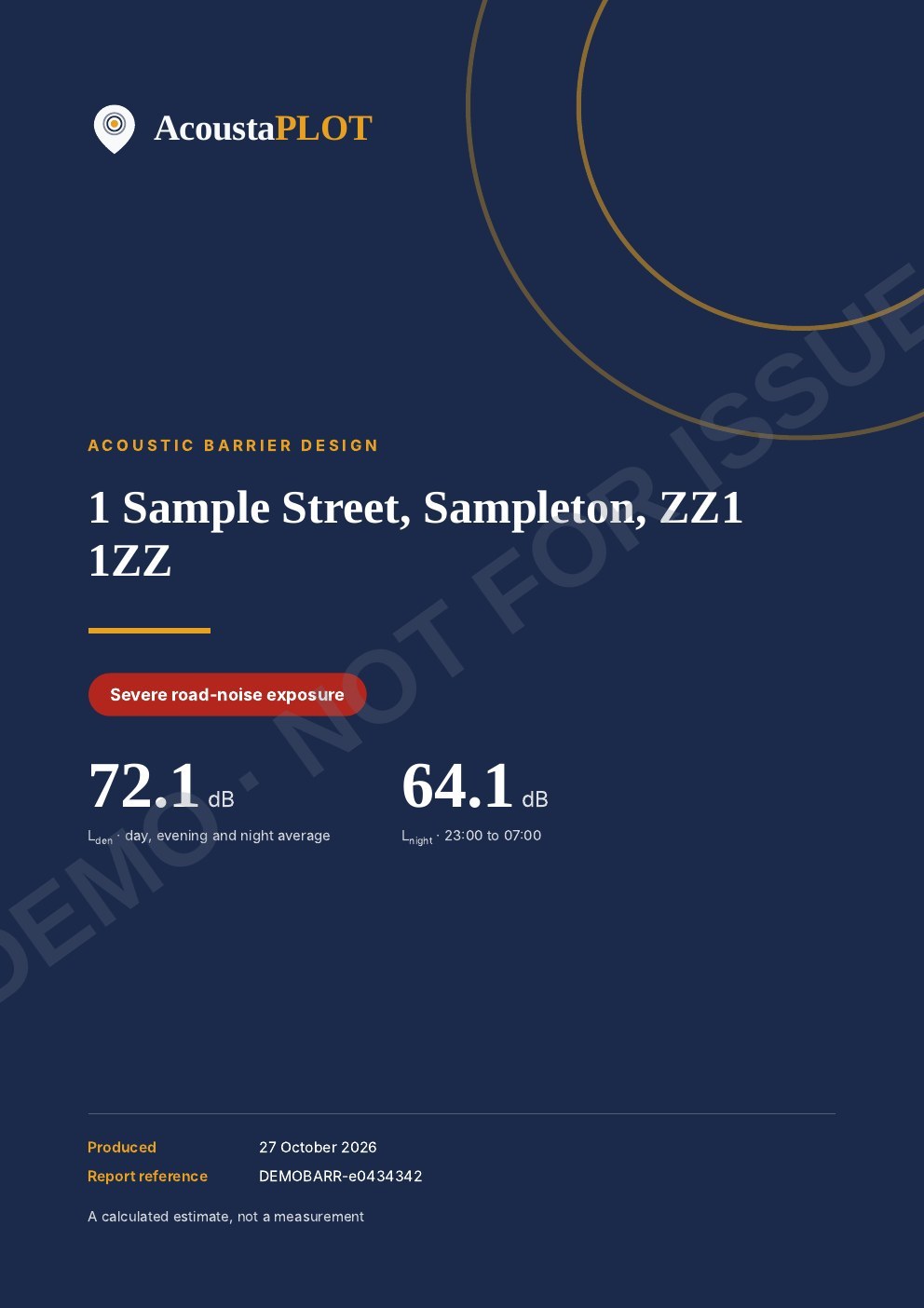
- to find out whether a fence would help at all
- £99
- for a modelled height, length and position for your plot
- £349
- generally within permitted development in England (1 m next to a highway)
- 2 m
- typical time to a Barrier Design report
- 1–3 min
It isn't a fence-shopping question. It's a “will this actually work” question.
A fence that looks substantial on the day it goes up can still do almost nothing acoustically. To meaningfully cut road or rail noise, a barrier has to do three things at once: be solid with no gaps, be tall enough to actually break the line of sight from your window or garden to the source, and be long enough — with returns — that sound can't simply travel round the ends. Most garden fences, built for privacy or a boundary, satisfy at best one of the three.
So before any construction decision, the real question is what height, length and position this specific garden would actually need — and whether the numbers say it's worth doing at all. Sometimes the honest answer is that a fence won't help much, and that's worth finding out for a few hundred pounds, not after several thousand pounds of fencing and landscaping.
Find the right starting point in one question
What are you actually trying to decide?
Will it help? How do I build it? Where do I spend?
- Start hereStep 1
Fence Feasibility Check
“Would a fence actually help here?”
£99per reportSource: Catalogue price- Everything in Screening
- The same barrier-design engine as Barrier Design, run lighter and faster
- A plain verdict: worth pursuing, or not
- An indicative cost range for the design that would work
- Step 2
Acoustic Barrier Design
“How do I fix it?”
£349per reportSource: Catalogue price- Everything in Insight
- ISO 9613-2 barrier design
- Modelled fence height / length / position
- Interactive model + acoustic-shadow visual
- Step 3
Complete Property Noise Report
“Where do I spend, will it get worse, what's my leverage?”
£499per reportSource: Catalogue price- Everything in Barrier Design
- Mitigation options + indicative costs
- Future-risk check (developments & road schemes)
- Negotiation context
The £99 Feasibility Check is credited once, against the same assessment, if you upgrade from that report to Barrier Design or Complete. In Barrier Design you can compare fence heights side by side — what each extra half-metre buys in decibels and in pounds, and whether it needs a planning application. Choosing where the patio goes? Garden Layout Comparison Study →
Modelled first, so the money goes where it works.
An honest “it won’t help”
Modelled for your plot
Height, length and returns
A cost to hold quotes against
Planning flagged early
A calculation, not a measurement
Added to any report. It packages your modelled mitigation cost and research-based price context onto one offer-ready page — built for an agent or solicitor conversation, but the same modelled figure is also a plain benchmark to hold a contractor's quote against.
Garden noise, railway lines, new-build estates by a bypass — the situations that come up again and again, and what does (and doesn't) fix them.
Where the numbers come from
The same national datasets and published standards behind every AcoustaPLOT report, named next to every figure they produce.
Modelled from national datasets with the standard UK methods — and labelled as modelled, always.
Questions people ask before they build
Will a fence definitely help?
Not always, and the design report says so before you spend rather than after. If your geometry can't break line of sight, or sound would simply flank around the ends, the report tells you that plainly — pretending otherwise sells you several thousand pounds of disappointment.
What's the actual difference between Barrier Design and Complete?
Barrier Design answers “how do I fix the noise”: a modelled height, length and position for a barrier on your plot. Complete includes all of that, then adds whether a barrier should even be first on your list, what else is worth spending on and in what order, a genuine traffic-growth projection for what's coming, and negotiation context if you're still mid-purchase.
Do I need planning permission for an acoustic fence?
In most gardens, up to 2 metres falls within permitted development (1 metre next to a highway) — England rules, and always worth confirming locally, especially in conservation areas. The design report flags when its recommended height would need an application.
I need this to negotiate with my contractor, not a buyer — does the Negotiation Pack help?
Partly. The Pack is built for a property-price conversation with an agent or solicitor, not to adjudicate a contractor's invoice — but it carries the same modelled, itemised mitigation cost your Barrier Design report produces, which is a legitimate plain-English benchmark to hold any quote against, whatever the conversation actually is.